Friday, September 9, 2016

Guy Graybill Presents Magnificent Gift to the History of Music, and, in particular, Italy...


This book is dedicated to the memory of St. Cecilia

This is not a technical work. It is an historical survey, written as an appreciative tribute to the overwhelming, and unrivaled, contributions which the Italian people have made to music...
~~~


Antonio Vivaldi (1678-1741) This classical composer has been saddled with a nickname, based on his hair color: Prete rosso ("The Red Priest"). One of the giants of classical music. Vivaldi was born in Venice and went on to teach in a girls' orphanage, and continued to be associated with that institution for most of his life. Meanwhile he was pouring forth hundreds of operas, concertos, etc., for all of his adult life. His most noted piece of music is a concerto entitled "The Four Seasons."
If one listens to his music--his trumpet and other concertos, operatic passages, forerunners of the symphony, and other works, a conclusion begins to build in the mind: Vivaldi borrowed the style of W. A. Mozart. The lilting passages and sprightly tunes can almost convince the listener that this Venetian violin virtuoso and skilled composer borrowed a technique or two from Leopold's son. One could be fully convinced of this if one fact didn't stand in the way: their vital dates. As noted above, Vivaldi's life span covered the years 1678 to 1741, while Mozart's life extended from 1746 to 1791. If borrowing ocurred,it would have been done by "Wolfi."
~~~
New Anthem for an Ancient Land... It may strike one as strange that Italy, which once formed the core of a sprawling, vibrant empire--and which provided the world with a cornucopia of dazzling music--had no national anthem until "yesterday"! Such can be the results of historical vagaries.
...Finally, in 2005, Michele Novaro's The Song of the Italians, was officially declared to be the Italian National Anthem.
~~~


BRAVO!
The Case for Italian Musical Mastery

By Guy Graybill
Foreword by Frank Tenaglia

This is the version I used to sing and is my favorite...Isn't it Beautiful?!

Author Guy Graybill, a regular contributor to Book Readers Heaven, recently published the second edition of his most important book, in my opinion. I had read the first edition six years ago. There are some changes and additions to the text; however, I realized that it was my own reading and review of the book that had changed. I realized that my present review blog requires a much deeper absorption in what is being presented and my expansion beyond a basic review had greatly matured in those past years. I'm happy to bring to you a larger sampling of the book than normal, for it is only in sharing and listening to the music that we are able to learn and comprehend what Graybill has provided for us...

First, Graybill is a historian, which is readily seen in the significant breadth of this book. That was of course required because of the breadth and diversity of the field of music which he has presented to us. He provides documentation not only on the voice and instruments, but on all of the evolution of their use into the music which, as his title claims, the Italians mastered and shared with the world. The book also includes relevant pictures, a bibliography, and the very important index for this type of book which will, undoubtedly be used for students and those involved in professions surrounding music.


Throughout the period of time that the europeans identified as The Middle Ages...the main objective of music was a way to respond to religious inspiration. The main religious musical form was the plainsong or chant, a simple, nearly tuneless song used to accompany hymns, psalms and prayers where the words are not metrically expressed (or not written to fit even moderately complex tunes).
~~~

Dividing his book into "Acts" instead of chapters was one of the little additions that added to the overall effect of the book for readers. For instance, Act III begins the narrative on the historical review of musical instruments.

Like me, many readers may have heard of the family Stradivari, but Graybill's storytelling adds much to those that were also making violins during that time, and even brings readers up to date on what has developed in this area during the recent past, even mentioning a film made in 1998, The Red Violin, which spotlights the place the violin has achieved in the world of music...

It is a logical move from learning of the instruments to learning of those geniuses who conquered them. We begin with "Paganini, the Peerless."

Graybill then moves on to the Piano and other instruments created at that time and quickly into the whole component of these beautiful creations as part of the orchestra, where he spotlighted that Claudio Monteverdi had emerged as the father of the modern symphony orchestra... And also as Opera's first genius...


,,,regarding the first great operatic composer: In March of 2007, Italy observed the 400th anniversary of opera. This observation was not based on the production of the first opera, Peri's Dafne, but on the first widely-accepted operatic work, Monteverdi's Orfeo.
~~~

Act IV announces "The Deluge" that began, noting that the result was History's greatest commingling of the intellect and the emotion that resulted in the creation of classical music. And classical music was born on the Italian peninsula... and would you believe it? Music's first Superstar! Giovanni Pierluigi da Palestrina, born in the mid-1520s! He wrote in musical forms of Mass, Motet,  Magnificat, Offertory, Lamentation, Litany, Hymn as well as Madrigal!
The author next delves into and provides short biographical sketches on the exceptional (most popular and/or influential) operatic composers, which of course is just a small selection of the many composers of the day. Vincenzo Bellini happens to be the first listed, including Il pirata as an example of his work.

He then proceeds on to the most well known operatic singers, starting with Giacomo Puccini. Along with him are others who you may recognize including Luciano Pavarotti, Ezio Pinza and Enrico Caruso, among others...


Act XI comes into the more recent contributions such as the Father of the Jazz Guitar/Violin, Salvatore Massaro, Mario Lanza, Frank Sinatra and so many more...

I'm sharing only a sample of my favorites because of the number!


And, of course, my personal favorite Italian singer...


I hope you've enjoyed this broader exploration of Guy Graybill's book. I am sure you all know when and why I will use his title to actually compliment his magnificent gift of musical history... Bravo! Bravo! Bravo! By now, I am sure you are quite confident that I am highly recommending this to all...and as a must-read for musical students and professionals! 


GABixlerReviews

Thursday, September 8, 2016

Visited the Middle Ages with Carole P. Roman... I Didn't Enjoy the Trip

Aalis or Melisende were popular
girl's were popular names. In fact,
your own name was Aalis. You
were named after your godmother.
~~~
Historians like to call this time period the Medieval or Middle Ages. The Medieval time period officially began roughly in the late 400s and lasted until the renaissance in the early 1400s.

The Roman Empire controlled most of Europe. It was famous for its strong network of safe roads, coinage, and a stable government that was defended by a vast and powerful army. This encouraged trade and the exchange of ideas between regions.

In 476, the Roman Empire fell apart, extinguishing communication and fracturing Europe into small communities called Feudal holdings that were governed by princes or warlords. Feudalism divided the vast empire into small kingdoms.

Each of the rulers of these small territories or fiefdoms held control of all the money and people who lived and worked the land.

They needed private soldiers to help them protect their holdings. Trained warriors called knights sold their services. Very often they were given land as payment. They became vassals to the person ruling the area. This meant they owed all their loyalty to the prince or warlord and would defend and fight for him.


If You Were Me and
 Lived in Middle Ages


By Carole P. Roman
Illustrated by Mateya Arkova


The publisher of books by this author has routinely sent these stories to me for review, so that I believe I've read all or most of Roman's work thus far. It's allowed me to come to know her work, her writing and to expect superior quality in her books. Sometimes that doesn't happen. This book starts out very similar to her other books, but with a book just under 100 pages, I could feel the difference coming on...

Consider if you would when you might have done research for a school paper and you made copies of what you found on line and then began to rewrite it according to a set format, without too much attention to the personalization of the words once you got into it.

What this results in is...a boring set of facts that, if you wanted to know about it, you could get on a number of sites online. As earlier mentioned, I grew...bored...reading this book. The verve, the vitality, the energy found in other books became lost and soon just disappeared. This also resulted in proofreading errors, mistakes in translating the researched text into the proactive storytelling method normally used, and a number of repetitions of the same facts. In other words, it needed editing. And interestingly, I found words in the Glossary that were not used in the narrative as well as questionable pronunciation guidelines, such as (roo-el) for rural??? or how about the definition of a shift - a simple kind of undergarment like a ship. Ahhh, I think that might have been a slip??? And other one syllable words, such as spit was divided as if it was two (sp-it)
Or how about taxes (tacks-es)...do we really teach children to sound out x as cks??? I hope not... Well...enough, you get the idea. I finally had to question, is the sounding out process supposed to be what they used in the Middle Ages, and would it really be a good thing for a child to learn, when it wasn't what we used today?

To this I am adding my own personal thoughts about the art work in this particular book. I think it could be a form of Impressionism, although I could be wrong. But I found it...sloppy. You know when you talk about teaching a child to color within the lines? It's that sort of thing...white patches surround some of the characters, as if the lines were not explicit enough that the coloring was extremely hard. Anyway, I recognize that children may not even consider that???

Ok, so why am I being so critical? Well, because these books are geared toward the older child, who hopefully will keep them in their home library. In my opinion, if you pay $20 for a library book, it should be able to be used into teen and adult years as a reference book. If not, just get your child a computer and teach them to learn how to search for school material. In a book, I expect something more... 

I won't say to not consider this book, I am providing this critical review for what I found. It is provided for your consideration...


GABixlerReviews

Wednesday, September 7, 2016

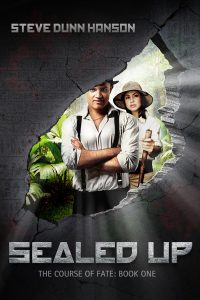
Steve Dunn Hanson's Sealed Up Provides Extraordinary Story of Fate - A Personal Favorite for Me!


Garden Grove, California
The strains of The Power of the Cross wafted through the closed office door as Luke Melvin Clinton knelt by his desk. "Give me your power tonight." That's all the prayer he had time for. He stood up and turned to the mirror at his side. He looked with satisfaction at how his maroon t-shirt hugged his arms, shoulders, chest, and waist, while his pleated alabaster trousers gave subtle hint of his muscular thighs. He glanced up took in his hair. Ginger in color and peppered with gray, it was coarse and thinning on the crown. Unmistakable evidence he was no longer a young man. "I sure as Hades don't look fifty-two," he grunted.
He looked into his gray-green eyes. They're alive! He gave himself a half smile revealing a small chip on his right front incisor, then he slipped on his midnight blue blazer. He didn't need to see how that looked. He knew. He wore a size 42, though it should have been a 44. His coat stayed open, and framed the muscles of his upper body including his six-pack abs. Tonight everyone would see Power in the Lamb printed in glittering gold across his T-shirt.
He pulled himself from the mirror and glanced down at the text message from Kish. For some reason, Kish wanted to meet with him. Soon. What for?  Luke shrugged as he walked out of his office and down the wide hall. He pushed through the double doors at the end then waited for the final words of his congregation's hymn. With his right hand raised, he trotted to the far end and back to the middle as the music morphed into thunderous applause and uncoordinated shouts of "Brother Luke!" He stood in the middle of the stage with both hands raised high in the air. Then as the camera zoomed onto his chest, he yanked back his coat so the words on his shirt seemed to leap out. The congregation became one resounding chant. "POWER IN THE LAMB!"
~~~


SEALED UP:
The Course of Fate Book One

By Steve Dunn Hansun

From the cover of the book, I was surprised with the beginning of the novel, at least when it came to the introduction of the Reverend Clinton, or Brother Luke as he was called. Until I had finished the book and read again, the subtitle, The Course of Fate. Wow! When that sunk it, I literally had flashes into scenes in the book where Fate, indeed, took over! But that is in retrospect that it came, because while reading, I soon was hooked and following all that this book does entail...

Which will have to remain untold here since they are all such an intricate part of the plot, crafted so tightly, that there is no way to learn what will happen, except by turning each page...quickly.


The merge of totally different subplots surrounding the main plot of searching for ancient documents and other possible artifacts creates a unique experience that spotlights two different forms of religion along with a somewhat expected criminal activity. Yet, even then, the surprises that move the story forward are totally unexpected and rarely anticipated... I loved this one and add it to my favorites for this year! So, let's talk a little bit about how the dots are connected...


sealed up front cover final CREATESPACE
Dear Brother Luke,
I have great admiration for you and
your Power in the Lamb ministry.
I have had many of my employees
read your book, The Lamb was a
Lion! Thank you for writing it. I
wish to help your ministry in a small
way. Please accept the enclosed as
my thank you. I will contribute more
from time to time. I wish to remain
anonymous. It is important that
you do not mention to anyone how
you received these funds or who
contributed them.
A follower of Power in the Lamb,
Ramon Gutierrez
~~~
Brother Luke has established a mission in Palenque and on his visits, he met a local shaman. Kish.
Palenque Collage.jpg
By Ricraider - Own work, CC BY-SA 3.0, https://commons.wikimedia.org/
w/index.php?curid=20425074
The mission supports the lives of the remaining Mayans in the area... Kish has now contacted Brother Luke and has asked him to visit on his next trip. What he shares and what he requested was far beyond Brother Luke's consideration, but as Kish continued, he finally agreed and went home to begin all that was needed. Brother Luke was to fund a search for Kish led by a noted professor, Nathan Hill, keep it totally secret that he was funding it, and only reveal his involvement if and when they found something. And that would be only to use in support of his ministry.


It was a part of a Book of Chilam Batam that convinced both Brother Luke and Nathan Hill to respond to Kish...

Provided for those who want to learn more

Near Naja
Luke drove just over a mile out of Naja. A two rut road went off to the right and into a copse of Guanacaste trees. He pulled under the trees and opened his laptop. He read his notes through twice then typed.
Meeting with Kish. October 17, 2011. I am to tell no one what I saw or heard except Dr. Nathan Hill, professor of anthropology at UCLA.
For more than an hour Luke entered what he had seen and what Kish had said. When he finished, he turned the computer off, and to clear his mind and put some order to what happened, he itemized aloud what Kish had told him.
"One. Some kind of ancient chronicles are hidden at Piedras Negras, Guatemala" He paused and rolled the name Piedras Negras around in his mind. He had read the name somewhere before. Where? He hook his head and went on. "Two. I get this Dr. Hill to lead an expedition to find them. Three, I told Kish I'd finance the whole thing. Four," That's as far as he got. His heart thumped in his neck, and his breath quickened. "What in Hades am I doing anyway?!
Destiny.
~~~

The magic of Sealed Up is, of course, the hunt and what was found by the anthropological team. Yet, it is not something that can be broken down into parts...Readers will enter into the actual activities of team members but, also, what was happening in the surrounding subplots. The fascination of the finds plus the intrigue of the diabolical plans outside the team are what turns this into a thriller that is, simply, awesome!

I enjoyed the characters who were sometimes not what they seemed to be, the historical background presented in support of the anthropological searches but the spectacular act of fate was beyond exhilarating...why, I have to admit, it was for me downright...satisfying! LOL 
This book was too unique to try to match with other historical treasure hunt books, especially the surprising correlation made toward the end...but if you love that type of book or movie, you'll need to consider this a must-read! Wish I could tell you more!


GABixlerReviews


I've lived in places that grew me . . . from a small Idaho farm town, a run-down neighborhood in St. Louis, and a middle-class southern California community, to Sydney, Australia, and Bucharest, Romania. My experiences are as varied as the places I've lived. I have a hopper full of "reality" including being a volunteer jail chaplain and flying with a U.S. presidential candidate in his small plane when an engine conked out. And all of this is fodder for my writing. For more of what I do and who I am, check me out at stevedunnhanson.com.

Tuesday, September 6, 2016

Latest From Ronald H. Balson out today! Karolina's Twins, A Literary Tale of Redemption...

I have come to the conclusion that the sound of war is not the guns banging nor the bombs blasting, it is the sound of a blessed voice that has made it through another stupid battle fought for naught... This book was inspired by the story shared to the author by Fay Scharf Waldman... and others...


"In those days, Chrzanow had about twenty-five thousand residents. Forty percent of the town was Jewish and the remainder was Catholic. The immediate area around Chrzanow was hilly and thick with forests. Beyond the perimeter, the countryside was a patchwork of farms, lumber mills and mining operations, especially coal. Krakow, Poland's second largest city, was forty-five kilometers to the east.
"My mother's family owned a store on the edge of the main square that sold building materials and farm provisions. It had been in her family for years. My mother, Hannah Scheinman, worked in the store se4veral days a week. My father, Jacob Scheinman, worked there as well. With both my parents working, Magda not only took care of the house, she took care of Milosz and me.
"The day I met Karolina, it was raining. Magda had gone out of town to visit her mother. My father was supposed to pick up Milosz, but he got tied up at the store and couldn't break away. He asked the school's headmistress to have someone help me bring Milosz home. Karolina was chosen.
"Our home was three blocks off the market square--a two-story, stone house with a gabled roof and a small attic. I mention the attic because it would soon become the centerpiece of my existence. When Karolina brough Milosz home, she hung around for a while. As young girls will do, we have a snack and gossiped away the afternoon. Soon my mother arrived and insisted that Karolina stay for dinner. I was twelve at the time. Milossz was seven. Karolina was thirteen.
"I had seen Karolina at school, but she was a year ahead of me. She was also very popular. Even then, as a young teen, she was exquisite and she grew more beautiful with each passing year. She was strong, athletic and vivacious. She had dark, curly hair and big expressive eyes. Coy, flirtatious, smart, bold and very sure of herself, the boys flocked to her.
"I didn't know at the time, but her confidence was a charade, an appearance that she wore like an overcoat. Inside she was unhappy and insecure. Her father, Mariusz Neuman was a withdrawn, severe man, always worried about his business. He had little patience for Karolina's gaiety. His business was struggling, especially in the 1930s. So, Karolina started spending a lot of time at our house.
"Karolina became an adjunct member of our family. We all loved her and she loved us, but I think she loved Milosz the most. She would sit and listen to him play even when he was just practicing his scales." Lena shrugged. "Or perhaps it was my mother's kreplach soup. Any way, Karolina practically lived at our house..."
~~~


Karolina's Twins

By Ronald H. Balson


It was a good life there in Chrzanow...There was no strife between neighbors because of their religions... Death occurred naturally and was accepted as part of the life cycle...

The Scheinman family had been comfortable and Lena's father had served during WWI, as no religious distinction was made at that time. One hundred thousand Jews fought in the German army, often holding high ranks, and twelve thousand lost their lives. Jewish families had been welcomed then and Jewish society flourished. After the War, Captain Scheinman was still referred to by his title in honor of his rank and service... They were happy days when Lena's mother would often be singing as she worked in the kitchen.

But when Hitler rose to power, everything changed for everybody.. But it was the Jews he planned to exterminate...

It is through Ben from Once We Were Brothers, that Lena Scheinman Woodward meets Catherine Lockhart, lawyer, and her husband and private investigator, Liam Taggart... Catherine is impressed with this elderly woman who is well-dressed, meticulous in her care and effectively communicates her wishes...

But she needs to share her story at her own pace and with her own memories... At first Catherine and Liam are ready and wanting to move on to the investigation to find two baby girls that were lost during the War. However, Catherine, who is the primary listener of the story, is soon caught up, just like I was, in Lena's life...


Come with me.
Where are we going?
To the Synagogue. We'll say Kaddish for your family...
"Kaddish?" I said to Yossi. My tone mocked him. "To Whom? To the absent God?" My voice was rising. "Do you think someone's listening when you chant Kaddish? Face it, Yossi, if there's a God, he's ong ago check out of this hotel. Where is he when they're torturing us? Where is God Almighty when pious people are slaughtered? Where is . . ."
"Stop!" he commanded. He grabbed my arms. "You are a Jew. They cannot take that from you. The Nazis can take away your house, they can take away your bread, they can even take your body, but they cannot take away who you are. The Nazis seek to kill us physically and spiritually. I may not be able to stop them from killing me physically, but I am in control of my spirituality. I, and I alone, will decide when to say Kaddish, when to welcome the Sabbath, when to dance on Simchat Torah. Your father, your mother and your little brother--they were all Jews. Nazi Germany, with all its might, attached their Jewishness, but it did not win. It did not rob them of their faith. The Nazis cannot win as long as we remain Jews. Do you understand?"
"I admire your strength. I admire your resolve. But I cannot share your reverence. Look what they've done to you, Yossi. A learned man living minute to minute on a basement floor. No food, no water. All because you are a Jew."
"And I am still a Jew. And so are you. If you will not say Kaddish, will you assist me to the synagogue and I will say it for both of us? Walk with me, please. We will santify the name of God at a time when such sanctification seems wholly unavailing. And that is precisely why we do it. Walk with me."
~~~


The story is written as a first-person biography. I imagined that Lena had gone over and over the events to keep everything fresh in her mind. Not because it wouldn't have been better to forget much of her life story, but because she had made a promise to her best friend, her adopted sister, Karolina, to try to find "Our" babies.

For it had been Lena, Karolina, and a nurse Muriel, who had come together, moved into a tiny furnace room, where heat was still available, and took care of the two beautiful little girls who brought bright light to the world, a love breaking through the hate, the pain, the hunger and the suffering that plagued every Jew who now had been pinpointed for elimination from Chrzanow - in one way or another... 


I find though I've read other individual stories from Holocaust survivors, I never tire of reading each singular tale. The war and the German soldiers' actions may change very little, but it is in the lives of those who suffered that we gain their memories, their losses...so that, we, too, can never forget.


Lena's father had forced her to promise to hide in their attic if the German's came for them. She could hear what was happening and then see the ravages to their home, including her brother's wheelchair, which had been totally destroyed, and his one shoe, which had undoubtedly fallen off when they lifted him out and carried him away... Lena picked up and treasured that shoe, taking her into what she faced ahead, as the only remnant of her family...


Almost the entire book is Lena's story, interspersed with the responses and beginning investigation activities by Liam... But the drama deepens when Lena's son begins legal action to have his mother declared incompetent to handle her own affairs... I must say that the legal and court portion of the book is quite interesting and is certainly a learning experience regarding this potential situation for all seniors....


Undoubtedly, the extensive coverage of the war is of interest to historical enthusiasts. I have noted that the author has expanded into other information of the time as it relates to the specific book. For instance, this book included much more about the Russian involvement...and also about those who secretly sought to eliminate Hitler...


There is both happiness as well as tears shed as Lena shares her story with us. The author mentions in his afterwords that the novel is made up of other people's stories in order to fill out the overall storyline. To me, that only broadened the impact, knowing that the Holocaust survivors are speaking out and sharing about the degradation--the horror--perhaps the worst, ever, that's been seen on this earth... Why did we not learn from it???


The contrast between such a beautiful old song and pictures of such a terrible event shows all sides of humanity. The beautiful side is shown by the song and the terrible side is shown by the photographs.
-..creator of video...

Ronald Balson has been given a wonderful gift--a gift of listening and then sharing individual stories molded into a novel that reaches into the hearts of readers. It may bring tears, but it also shares the joy that does come...

Highly recommended!


GABixlerReviews


Ronald H. Balson is an attorney practicing with the firm of Stone, Pogrund and Korey in Chicago. The demands of his trial practice have taken him into courts across the United States and into international venues. 

An adjunct professor of business law at the University of Chicago for twenty-five years, he now lectures on trial advocacy in federal trial bar courses. 

Travels to Warsaw and southern Poland in connection with a complex telecommunications case inspired Once We Were Brothers, his first novel.

Monday, September 5, 2016

Freedom of Information Act Spotlighted in The Spy Files by Kenneth Eade...

 
Long titleAn Act to amend section 3 of the Administrative Procedure Act, chapter 324, of the Act of June 11, 1946 (60 Stat. 238), to clarify and protect the right of the public to information, and for other purposes.
Acronyms(colloquial)FOIA
Nicknames
  • Public Information Act of 1966
  • Public Information Availability
Enacted bythe 89th United States Congress
EffectiveJuly 5, 1967

The way things are supposed to work is that we're supposed to know virtually everything about what they (the government) do; that's why they're called public servants.
They're supposed to know virtually nothing about what we do; that's why we're called private individuals.
--Glen Greenwald

Arguing that you don't care about the right
to privacy because you have nothing to hide
is no different than saying you don't care
about free speech because you have nothing
to say.
--Edward Snowden


The Spy Files
A Brent Marks Legal Thriller
By Kenneth Eade

I don't know about you, but I've not been happy with our seeming loss of Freedom of Information since The Patriots Act came into effect. While not beginning to be able to argue about what my thoughts and intuition arrive at, I thought it was a time for us to consider what can and perhaps is happening today... The Spy Files pits the Freedom of Information Act against The Patriot's Act in a very unpleasant legal case. And our main character of the series is in deep trouble...

You're right if you guessed, he is not the brilliant lawyer solving the case. He is the defendant and, thankfully, he had another learned gentlemen to represent him. A Quite Interesting elder in the matters of Law...

With a Prologue that sets us up for a legal case, when a brilliant scientist for MSoft Corporation, the software and computer giant, is murdered... we will not see anything about that murder until later in the story...so keep your eyes open!

[To Brent} He was a kindred spirit.
A man against the grain. A fish
swimming against the current. He
seemed to live by the epigraph in
Ray Bradbury's Farenheit 451:
"When they give you lined paper,
write the other way.
"
~~~
Michael Fine, somewhat of a freelance journalist who was always getting into issues on the Freedom of Information Act had come to Brent Marks for a consultation on the FOIA.

Michael Fine was a young journalist with an attitude. He had been fired from his job at the Los Angeles Times and had found his place in the "alternative press" of Dissident News. There was just no other place for him. He was a round peg in a square hole, an investigative journalist in a world of corporate media owned journalism...his reputation was well known. Hated by many government agencies because of his excessive use of the Freedom of Information Act to draw out and publicize sensitive government information, he had been told by the Pentagon: "We'll give you the documents, so long as you never file another FOIA request again..."
~~~

His story was about government surveillance, but nobody in the government is willing to talk about it, saying it's a matter of national security.

Brent added that "of course, The national security of spying on U.S. citizens."

Agreeing, Fine indicated that he'd filed the required FOIA requests with the DOJ, the FBI, the NSA and the CIA and that the Act called for receipt within 20 days. He noted that there was an upcoming vote by Congress that related and he needed to get his articles completed before then...
Congress will be voting on the ratification of a secret information sharing agreement with the EU that hasn't even been disclosed to the public yet, so the story I'm working on is right now. The FBI has refused to produce the records. Here's what they said after my appeal." We cannot produce the records requested because they are located in an investigative file which is exempt from disclosure pursuant to...
Fine had hired Marks to sue for responses on his requests...


And then the irony of our justice system begins! Fine had passed on records to Marks for safe keeping, because the FBI indicated almost immediately after they have given Fine the records that he'd requested...that they return them! They refuse initially and then are arrested...

Then the legal system offers Fine a deal if he puts most of the blame on to his lawyer! 
"Oh! What a tangled web we weave, when first we practice to deceive."
Fine was quite willing to agree with the Agents who had taken him in and offered the plea bargain...Now, it was Brent Marks who was labeled as working against the government!

Those of you who have read this series will remember that Marks normally starts a background investigation on anything related to what his present case is...And in this case, readers will discover that the "why" the government is acting proactively to get those files back just might be for criminal rather than national security reasons...

Kinda makes you wonder, stop and think...and...worry...

You know, I've seen that some have compared Kenneth Eade to John Grisham. I read a couple of his books years ago and never got interested enough to continue...Not so, with Kenneth Eade. He provides content I want to read and learn about but his characters are the real driving point for me. I enjoy Marks and his investigator, Jack Ruder. But the man who he chose to represent him against the FBI in this book was, really, one cool dude! Hope to see him again sometime... 

If you haven't read this author yet, and enjoy legal thrillers, do check this book and others by Kenneth Eade! Highly recommended!


GABixlerReviews


Described by critics as "one of our strongest thriller writers on the scene," author Kenneth Eade, best known for his legal and political thrillers, practiced law for 30 years before publishing his first novel, "An Involuntary Spy." Eade, an up-and-coming author in the legal thriller and courtroom drama genre, has been described by critics as "One of our strongest thriller writers on the scene and the fact that he draws his stories from the contemporary philosophical landscape is very much to his credit." He is the author of the "Brent Marks Legal Thriller Series", the fifth installment of which, Killer.com, won best legal thriller in the 2015 Beverly Hills Book Awards, and the "Involuntary Spy Espionage Series".

Said Eade of the comparisons, "Readers compare me in style to John Grisham and, there are some similarities, because John also likes to craft a story around real topics and we are both lawyers. However, all of my novels are rooted in reality, not fantasy. I use fictional characters and situations to express factual and conceptual issues. Some use the term 'faction' to describe this style, and it is present in all my fictional works." 

Eade has written twelve novels, which are now in the process of being translated into six languages. He is known to keep in touch with his readers, and offers a free Kindle book to all those who sign up at his web site, www.kennetheade.com. 

Email: info@kennetheade.com
Facebook: https://www.facebook.com/KennethGEadeBestsellingauthor
Twitter: https://twitter.com/KennethEade1