Showing posts with label Jr.. Show all posts

Wednesday, May 22, 2024

The False White Gospel: Rejecting Christian Nationalism, Reclaiming True Faith, and Refounding Democracy by Jim Wallis


If you want Peace, work for Justice. 

—Pope Paul VI 

January 1, 1972


FOREWORD: THE LOVE BATTLE TO SAVE THE SOUL OF AMERICA 

We are in a battle for the soul of America. But it is not, and has never been, simply a political battle. Ours is a moral struggle over who we take ourselves to be and what kind of country we want to live in. The moral question sits at the heart of our troubles today. It has been a central question since the founding of the Republic and the moment of crisis when it felt as if the entire experiment would fall apart. On the eve of the Civil War, in his first inaugural address, President Lincoln understood the moral gravity of the moment. “I am loath to close,” he said: We are not enemies, but friends. We must not be enemies. Though passion may have strained it must not break our bonds of affection. The mystic chords of memory, stretching from every battlefield and patriot grave to every living heart and hearthstone all over this broad land, will yet swell the chorus of the Union, when again touched, as surely they will be, by the better angels of our nature.* Lincoln’s words were a hopeful and desperate gesture: an appeal to those preparing for war that they would, instead, reach for their better angels and not secede from the union. But at the heart of the American experiment, and Lincoln understood this intimately, rested a distorting and disfiguring view: that some people, because of the color of their skin, ought to be (dare I say must be) valued more than others. This view took shape in the context of a country committed, at once, to the ideals of democracy and to the evil of slavery. And that contradiction threatened to rend the soul of the nation. But the break had already happened. Before one cannon was fired at Fort Sumter, American Christendom had split over the issue of slavery. The Civil War had already begun over the moral question of holding another human being as chattel. Some Christians found religious justification for their greed and prejudices. Others condemned the practice. Those held in bondage and who bore the brunt of the cruelty of slavery dared, as the theologian Howard Thurman said, to redeem the religion profaned in their midst. This dramatic split would come to characterize the nation’s religious landscape as race segregated the idea of the beloved community and many were willing to die and kill to maintain it all. Frederick Douglass would put the point more poignantly: “The slave auctioneer’s bell and the church-going bell chime in with each other, and the bitter crises of the heart-broken slave are drowned in the religious shouts of his pious master.” The historian David Wills has insisted that one way to tell the story of American religious history is through this “encounter of black and white,” an encounter that “occurred within the context of a slave system”† and the world it created that colors how we see each other and how we imagine being together. And here we are over 160 years after Lincoln’s first inaugural address still grappling with the moral question of who we take ourselves to be and how a certain distorted view of Christianity sanctifies our hatreds and fears. Will we reach for our better angels? Jim Wallis has spent a lifetime bearing witness in the face of injustice. He has worked diligently to organize faith communities and leaders to cast away the idolatry of race and to live the gospel. In this powerful book, The False White Gospel, he takes on the latest American expression of white Christianity. Without mincing his words, he understands that white Christian nationalists have clothed their hatreds in the garments of their faith. They sacralize power and worship at the altar of autocrats who all too often profane the message of Jesus. These are the descendants of those who so easily reconciled Christianity with slavery and Jim Crow. But Jim Wallis, as he has always done, refuses to sit by silently as these forces hijack his tradition. He understands that this moment is a moral crisis that cries out for courage and conviction and, especially, for Christians to defend their faith by finally leaving behind the idea that some people ought to be valued more than others. And he provides the tools for the fight with Scriptures and commentary that guide our hearts, our minds, and our actions. His is an invitation to us all to engage in the moral battle. In February 1960, James Baldwin spoke at Kalamazoo College in Michigan. The talk would be published the next year in his book, Nobody Knows My Name. It is a fascinating meditation on the idea of America and the so-called problem of minorities. With typical insight and power, Baldwin insisted that “what we really have to do is to create a country in which there are no minorities—for the first time in the history of the world.” But, for me, it is how he arrives at this piercing insight—through an interrogation of the role and place of Black people in American life and our view of God—that speaks to the power of The False White God. He wrote: [T]he role of the Negro in American life has something to with our concept of what God is, and from my point of view, this concept is not big enough. It has got to be made much bigger because God is, after all, not anybody’s toy. To be with God is really to be involved with some enormous, overwhelming desire, and joy, and power which you cannot control, which controls you. I conceived of my own life as a journey toward something I do not understand, which in the going toward, makes me better. I conceive of God, in fact as a means of liberation and not a means to control others. Love does not begin and end the way we seem to think it does. Love is a battle, love is a war; love is growing up.‡ God cannot be shackled to the evils of white supremacy nor imprisoned in communities that claim Him as their possession. Baldwin insists that to be with God involves something more expansive and evolving—that it is in “the going towards” that we grow and are made better. Jim Wallis preaches this every day and, in this book, he calls the nation to grow up and he calls us all to fight the love battle to save the soul of America. 

—Eddie S. Glaude, Jr.


From His (Jim Wallis) Introduction:

...I suggested that, perhaps, this was a “Bonhoeffer moment” for the American church. They all knew who Dietrich Bonhoeffer was. A young pastor like themselves, he led the “confessing church” movement in opposition to the rise of Nazism in Germany during the 1930s. These were a small minority of churches who dissented from the acquiescence and loyalty of most German churches to Hitler’s rise to power. In particular, the confessing church was marked by a younger generation of seminarians whom Bonhoeffer taught and some even lived in community, and whose life together became central to the Christian resistance to the Third Reich. I told them that history doesn’t repeat but it often does rhyme, in the words of Mark Twain, and the rise of another racialized authoritarian movement in America—right now—also calls us to a faithful response. Reflecting on Bonhoeffer and asking together what a confessing church might look like in America now turned into an amazing and insightful conversation—one that I hope to see happening across the country. Where is that Christian resistance emerging now, and where is the true gospel being recovered and reclaimed in response to the false white gospel of Christian nationalism now on the rise? I reminded them that Bonhoeffer failed in his attempt to stop Hitler and was executed in the end—hanged by the Nazis, along with many of his seminarians, in a concentration camp only days before the Allies arrived. But, I asked, how many of the German church pastors who supported Hitler do they remember now? None, of course. The witness of Bonhoeffer later inspired the South African churches as they helped bring down the apartheid regime; and now we were talking about him again. The truth-telling about racial justice and reconciliation that we now need will, indeed, cost some pastors their jobs and pensions and parsonages; and it will lead to other pastors and leaders of predominantly white churches losing significant numbers of their congregants. A yet unknown number of white Christian leaders will find the courage to stand up while others submit to the “cheap grace” that Bonhoeffer warned against. There will be churches that stay open and faithful to the inclusive and reconciling gospel, despite the loss of some of their members, and new members—especially young people—may join them because of their authenticity and courage. The suffering that comes with the courage to stand against the rise of authoritarian racism cost Bonhoeffer and other resistors to Hitler their very lives. Indeed, one of the pastors in the room that morning recalled a quote by Bonhoeffer, “When Christ calls a man, he bids him come and die.” But what it might mean to die to self and live for the gospel truth of Christ is yet to be known in our time, and these young pastors were all wrestling with that. While we can and must work against such violent outcomes, it is increasingly clear that voting rights, racial equality, civic justice, and democracy itself are now at serious risk in America—and that is becoming an understatement. This is a time of testing—both for the future of our democracy and for the integrity of our faith communities. We are literally in a battle now between false religion and true faith and between racial fascism and multicultural democracy. That fight stems from fear, the motivator of hate, and the threat of violence. Helping to set us free from that fear, hate, racism, and violence is the purpose of this book. I had said in my talk the previous evening that “crossing the color line” is the pilgrimage that has, and continues to change my life. I believe that crossing the color line to a genuine multiracial democracy will be the path that finally fulfills America’s promise. And where the congregations of all faith traditions stand in this battle for the soul of America will define the authenticity of our faith at this critical historical moment. It will also determine whether a new generation will have any interest in embracing any of our faith communities. Like growing numbers of young people around the country, many of my students at Georgetown are not currently practicing any religion and are in the “none of the above” religious affiliation category. But most of these “nones” still believe in God or something beyond themselves, and are looking for authenticity and courage in both leaders and institutions. Democracy, faith, and the generational future of our faith communities are all at stake...

~~~


For reference...
Donald Trump has already been found guilty in two civil courts
one for falsification of state records; one for rape and defamation
Now going on is Criminal Court; This video refers to the one major defense witness for Donald Trump. 
Closings will start after Memorial Day


Bringing Peace Through Words

God Bless Us All
Glenda


Hear the words of those speaking...
God loves ALL of His Children
Jim Wallis Wants to Help America 
Reclaim True Faith
and Find Again Democracy...
FOR ALL AMERICANS
Reading Now...


Saturday, April 30, 2022

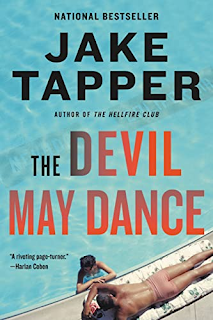
The Rat Pack Investigated in CNN's Jake Tapper Political Fun Farce...The Devil May Dance 2nd Book With Charlie and Margaret Marder


Ahead, the members of the Rat Pack and their hangers-on were oblivious to the Marders’ concerns; they were soaked in bourbon, singing, laughing, and loudly gossiping about ghosts as they stumbled around the graveyard. Charlie and Margaret could make out pieces of their conversations. 
There goes Wallace Beery. He won an Oscar too, Frank! Remember he and a couple mobsters beat that guy to death at the Troc? 
Suzan Ball. Lucille’s cousin. Twenty-one? Cancer. Bit parts. Aladdin and His Lamp. 
Here’s the Garden of Memory. Some reverence, folks, Bogie is over there. Bogart, Sinatra’s hero, was credited with coining the term Rat Pack to describe an altogether different group of friends, but both the term and Bogie’s beloved Lauren Bacall had been posthumously co-opted by his protégé Sinatra. 
Charlie and Margaret headed back, and the snatches of conversation soon grew too distant for them to hear. They made their way over the hills on narrow paved roads to the parking lot. The others held their breath. Above them hung a half-moon, about which Sinatra started to sing: Something, something, man in the moon something, something, baboon, something, something swoon… Everyone exhaled; the wind had blown his dark mood away with the clouds.
 Lawford led the pack in a charge up the hill as Martin sang a song mocking the very young girlfriend of Sinatra’s rival Elvis Presley. “Are you lonesome tonight?” he crooned. “Are you horny tonight? Have you reached puberty yet, my dear girl?” Sinatra cackled. He’d hosted the television special Welcome Home, Elvis, after Presley’s discharge from the army, but Sinatra made no secret of the fact that he found most rock and roll deplorable; he thought the music was written and performed by cretinous goons, and Presley was the gooniest of them all. 
Charlie and Margaret walked slowly, bringing up the rear. Margaret sighed, seeming annoyed. “Stop pretending that this isn’t a little cool,” Charlie said, indicating the scene—they were hanging with icons of the zeitgeist, boozing in a celebrity graveyard in the middle of the night. 
“Ring-a-ding-ding,” said Margaret dryly. The crack of a gunshot echoed across the grass. It took Charlie and Margaret a moment to make out what was going on: Davis was firing Fat Tony’s gun at a grave. Or, more precisely, at the sculpted angel on top of a crypt. “What th—” said Margaret, poking Charlie in the ribs. 
“I think ‘Who the’ is more like it,” Lawford said to Margaret. “Doyle, the guy buried there, was a producer who screwed Sammy back when he was touring the country on the Chitlin’ Circuit with his dad and uncle.” Charlie looked at the crypt. He didn’t recognize the name. Davis yelled, “Son of a bitch!” as he fired off another round. The angel’s head exploded. “There ya go, Smoky!” Martin cheered. He ashed his cigarette on a freshly dug grave, then took a swig from a paper cup. “I’m not done yet,” Davis said, pulling the trigger once more. The blast hit the cherub in the crotch, shattering the statue. One of the pieces of concrete clipped Charlie. 
“Oof,” he said, grabbing his shoulder. 
“Honey!” Margaret cried. “I’m fine,” he said, rubbing the bruise. “Oh, man,” Davis said. “I am so, so sorry.” Davis was soused but clearly concerned. He made his way precariously toward Charlie, wobbly and contrite. The singer was a wee man, not even five foot five, all bone and sinew, maybe ninety pounds dressed for winter. 
“It’s nothing,” Charlie said.
Earlier, Margaret, the ever-prepared former Girl Scout, had stashed the small first-aid kit she brought with her on all family excursions in the trunk of their rented white 1962 Impala convertible. 
“We’re missing all the fun,” Charlie said as a gunshot followed by the pop of an exploding light bulb cracked in the distance. “I’m really fine, honey.” 
“Sure sounds like fun,” Margaret said as she held out her hand for the keys. Charlie reluctantly produced them. She inserted the key and opened the trunk while Charlie looked to the hills, where the echoes of crooning and guffaws sounded almost like local wildlife.  
“Yumpin’ Yiminy, now it’s a clambake!” yelled Sinatra. “More booze!” Another bottle materialized as the pack continued its run through the cemetery, minus Giancana and Fat Tony, who’d turned to walk back to their car. 
Charlie and Margaret stayed in place, leaning on a thick, slightly cracked tombstone. “Irish exit,” Charlie said, motioning toward the departing mobsters.
Then Margaret screamed. From the gauzy illumination of a distant streetlamp, Charlie saw the shape in the trunk, a big shape. It was a body. Charlie stepped closer. He recognized the face, as did Margaret, who turned away. He looked with horror at the woman that they’d last seen days before and that he’d seen quite a bit of in the past few weeks. Her eyes were two bloody caverns; they must have been shot out. There was some brain and bone residue in the trunk but not enough to suggest she had been shot there. Her mouth was agape, her jaw helplessly, horrifically slack. Charlie and Margaret stood frozen until the sudden arrival of the Rat Pack, who apparently had raced over in response to Margaret’s shriek. 
Sinatra looked into the trunk. “Charlie,” he said. “Just what the hell have you done?”
In the past few years Margaret was often reminded of the army’s slogan that “every man has his breaking point.” She was constantly looking for ways to prevent Charlie from reaching his. Whatever the doctors were labeling it, combat exhaustion or combat neurosis or battle fatigue, Margaret knew it would be with him forever. Beyond that, his life in Congress, where he’d been for almost a decade now, was infinitely frustrating—accomplishing anything good required Sisyphean efforts, while ethical compromises were everywhere. And at some point along the way, Charlie found that the constant fundraising and glad-handing to stay in office for his New York constituents had begun to eclipse the work itself...

After the heavy and complex first book, Tapper took a lighter theme to close out the political life of Charlie and Margaret Marder. I call it a farce, even though some of it might be true. A decade had passed and Margaret was constantly watching how Charlie was dealing with the pressure, and, even though Charlie was trying to hide it from her, his increasing need to use alcohol to keep him going.

So when another favor was requested, which involved the simple task of being a consultant on an upcoming movie, both seemed to think it was a good way to fill up time between sessions and maybe do a little vacationing... The Movie was called "The Manchurian Candidate" and Sinatra was to play the lead...

The  Favor: The Kennedy  Family wanted to know just how close and involved Sinatra was to the Mob! And  would his involvement with the presidential candidate be a burden or a good thing...

So Charlie and Margaret were often at the set while the film was being made, with Charlie giving his feedback related to what happens in particular political-related scenes...

And for the rest of the time, Charlie was spending lots of time enjoying the partying that always seemed to be going on... Even when he was at a party, without Margaret, he enjoyed himself, except he was soon placed into another situation when one of the beauties that always was around wound up in the hot tub with Charlie...and a picture was snapped! Fear of its going public was bad enough, but when the girl was found in Charlie's car trunk, he was once again afraid--afraid he was guilty of murder and would spend the rest of the days in prison for a crime he didn't remember, but could have(?) done... Finally, drinking so much, Margaret got involved and Charlie shared it all!


In the meantime, Frank was making changes to his home, doing everything possible to ensure Jack Kennedy's comfort and all that he could possibly need when visiting with his friend, Frank...

[Talking with Robert] Charlie had to smile at the excess. “You don’t want the president to stay there?” Throughout the 1960 election, Sinatra and the Rat Pack had gone all in for Kennedy, and the campaign had been only too happy to capitalize on the fame, the glamour, the money. Sinatra had even rerecorded his Oscar-winning song “High Hopes,” written by Sinatra songmeister Jimmy Van Heusen, with new lyrics: Everyone is voting for Jack ’Cause he’s got what all the rest lack Everyone wants to back—Jack Jack is on the right track! 
As if reading Charlie’s mind, Kennedy shrugged. “When I started at Justice, an agent asked me how he could be expected to go after Mob bosses when my brother’s most famous supporter is paisans with a bunch of them. I took his point. Unfortunately, the FBI doesn’t have any evidence supporting the rumors that Frank is mobbed up, but now he shows up in this wiretap.”

In fact, the majority of the book is in casual settings with various members of the Rat Pack, partying... So, here's some of the music at those times...

“Our crew’s in the back,” Lawford said, pointing. Live jazz played in one of the rooms; the Daisy had so many, it was hard to keep track. Charlie recognized the tune: “Pfrancing,” from Someday My Prince Will Come. He polished off his bourbon in one gulp and began to lose himself in the tempo and the strutting trumpet solo, which sounded to him like a man crying. “It’s like Miles Davis himself is here,” Margaret said. She was trying to keep cool, but she had her hand on his arm, and he could tell she was a bit thrilled. They followed Lawford through the crowd of stars, ogling in every direction...

“Congressman, this one is a keeper,” Sinatra said, pointing at Margaret. “C’mon! Let’s get some swinging music going in here!” He raised his glass and held it up to Margaret. From the speakers came a rapid race of trumpets and trombones, soon interrupted by Sinatra’s voice singing an old Mexican song from the 1930s that he’d covered in May and released on Swing Along with Me in June. Granada, I’m falling under your spell And if you could speak, what a fascinating tale you would tell…


“Sure looks like him from here,” Charlie said. He pushed his chair back from their tiny square table (dinner and two-drink minimum, $5.95 per person, not a room for people without some means). “I’m going to go over there and check it out.” “You sure that’s a good idea?” Margaret asked. “No, but I suspect a middle-aged white guy will blend better at this stag party than either of you.” “Point, Charlie,” said Street. “What is this thing called love?” Sinatra sang. Onstage, he and Martin slouched on stools, drinks in hand. “Frank, if you don’t know, then we’re all in trouble,” Martin quipped. Then, in a singsongy voice: “Did you ever see a Jew-jitsu?” “I did,” Sinatra responded, raising his hand. Davis, who had considered himself a Jew since the 1950s and had formally converted earlier this year, ran onto the stage in mock offense. “Be fair!” Davis barked at Martin as Sinatra pretended to hold him back.


Charlie’s heart sank as he again imagined his once indomitable father alone and hopeless. “We need to get something to the AG about—” He gestured toward Sinatra, who was in the midst of the intro to “Luck Be a Lady.” “They won’t even let Charlie talk tohim on the phone,” Margaret said. “They really seem to relish being bastards, the Kennedys,” Charlie said. “The good news is, the prison doctors told me they don’t think it was a heart attack after all.” “If it wasn’t a heart attack, then what was it?” Street asked. “I don’t know; they don’t know,” Charlie said. “Nothing life-threatening, they don’t think. They also ruled out a stroke. But he isn’t talking.” They all sat sadly at the table. “Why is he at the Tombs anyway—isn’t that a city jail?” Street asked. “Feds have a wing,” Charlie said. “And the AG gets a lot of leeway.”

By the Way, there is no song, "The Devil May Dance"--it was a title created by the author...

Charlie and Margaret, ten years from the first possible death sentence for Charlie are also worried about his father who was arrested and Charlie has not been able to visit. Stress grows and it was time to take the offense and find out exactly what was going on! Politics always seems to be...messy...doesn't it? Me, I enjoyed the music more than anything. I found, even though they were all friends, I was offended by the racial slurs constantly in their comedy... But then, I'm not much for comedy at the expense of...anybody... Guess my empathy gets in the way...

I enjoyed this much more than the first book, simply because of the setting. Sure the mob was there in many scenes, but it didn't necessarily seem like they were involved politically, even though that was the purpose of Charlie and Margaret's involvement. Have to admit that I was more impressed with Margaret as a character. She was a strong woman who still loved her husband, even though he was not doing well in dealing with the politics of, seemingly, every part of their life... But the ending was satisfactory, if not thrilling or spectacular... From a historical perspective, it was indeed a trip back into the 50s, with The Rat Pack leading in bringing music into so much of the book! It's worth my recommendation for you to check it out!

In the meantime, I'd like to share a little bit of the words directly from the author, Jack Tapper, about today's political division...


A personal note: 

I know many of you don't have the time I have to follow what is happening, by watching multiple sites for news information. At the same time, I must point out that it is only through Americans themselves that we can...and hopefully will...maintain our democracy. Right now, I have decided to go to the polls on May 17th, the day before I go in for hip surgery, BECAUSE I DON'T TRUST WHAT THE REPUBLICANS HAVE DONE AND MAY DO TO PREVENT MAIL BALLOTS FROM BEING CORRECTLY COUNTED.  
We all saw Trump's Big Lie that the presidential election was not real...that it was a big lie! And republicans are doing everything to change or manipulate voting activities to try to again force questions regarding who wins in the primaries! YOU must help ensure that our democracy--the privilege to vote, is not made into a farce once again... lies controlled by the republican party that is infecting our nation... 

Book Readers Heaven will do all that it can to share the truth. I care little about politics, as my comments on Tapper's two books have shown. I do care about the rights of ALL PEOPLE TO BE EQUAL... 

Will you help me? SEARCH OUT THE TRUTH ABOUT YOUR CANDIDATES...

SEARCH OUT THE TRUTH ABOUT WHAT IS BEING TAUGHT IN SCHOOLS...DO NOT LISTEN TO REPUBLICAN CANDIDATES THAT ARE LYING TO INCITE AGAINST MISINFORMATION AND/OR making OUTRIGHT LIES!

REMEMBER IF REPUBLICANS SUCCEED IN BANNING ALL THE BOOKS THAT THEY WANT TO, THEN RECOGNIZE THAT ONLY WHITE MALE REPUBLICANS WILL BE TOTALLY HAPPY... and Free...

That is not what Democracy is or was in America... Please do everything you can to learn who speaks truth and responds to our constitutional rights in all ways...


Wednesday, July 6, 2016

Author John R. Tucker Asks the Question, Are You Jesus' Disciple? Based upon Book of Matthew


John R. Tucker, Jr., a devout believer in Jesus Christ, resides in Baden, PA with his wife Bettie. They have two adult children, Eric and Lori, who live nearby, giving them access to their delightful grandchildren, Talia and Pasquale.

The author has a Bachelor’s Degree in Engineering and retired after 34 years of employment with U. S. Steel Corporation. He then wrote over forty investigative Bible studies that are being used for in-depth teachings at various churches. He also taught a local prayer group as a member of a national organization known as Christian Business Men’s Connection which is active in 80 countries and has over 50,000 members.

John felt inspired to write this book because of his personal hunger to know greater details about the teachings of Jesus Christ. His findings gave him the desire to be a better modern-day disciple. The author hopes that readers will have this desire, too.


Book Description

The title of this book asks “Are you Jesus’ Disciple?” It emphasizes the five discourses taken from the Book of Matthew as taught by Jesus Christ. As readers progress through the pages, the words of Jesus seem to come alive in His teachings. The book illustrates that believers and non-believers should ask themselves if they are truly living the life, or want to live the life, that Jesus demands of them. The five discourses include: ethics, missions, the Kingdom, community life and judgment. Within these discourses and teaching, the disciples of that time were instructed how to properly live their lives as Christians and how to reach others with the same message. There were also some believers and non-believers who gathered near the disciples to listen to this intriguing Teacher. Those who did not believe were simply following the crowd. However, some took His words to heart and wanted to hear more. Today, Christians and non-Christians can read the discourses and make a decision as to what they believe or not believe.
~~~


9 This, then, is how you should pray: “Our Father in heaven, hallowed be your name, 
10 your kingdom come, your will be done on earth as it is in heaven. 
11 Give us today our daily bread. 
12 Forgive us our debts, as we also have forgiven our debtors. 13 And lead us not into temptation, but deliver us from the evil one.

...The Lord’s Prayer is like a letter that we send from earth to Heaven. In the beginning words in Verse 9, Jesus is giving the Jews guidance as to the proper way to pray to the Lord. In the remaining words in Verse 9, He is telling the Jews to whom this letter is being 1. To “Our Father” but not to saints or angels. 2. To “Heaven,” the place where it is going. The word “Our” in the words “Our Father” specifies that in addition to praying for and alone, Jews should pray with and for others. The word “hallowed” refers to the nature of our Father who is holy and distinct beyond all mankind...
~~~


It is quite easy to read a book and pick up those thoughts, those principles that mean something to our own lives. Certainly, with John Tucker choosing the Book of Matthew as the central book of the Bible to discuss, he has chosen a selection that many will recognize and know what the book contains... Yes, but... do we really know what the Book of Matthew says about certain topics covered therein?

Some readers may be totally knowledgeable, while others will recognize the conceptual overview but not know the context in which the subject is covered. Tucker has presented an easy-to-use method by which he presents the results of his long years of study and research. It can easily be used for group Bible study or as an independent study guide. Or, simply, to compare your own beliefs with the author and consider how his relates to the book's question--Are You Jesus' Disciple?

I've taken something that most of us will have at least heard in their lifetime--The Lord's Prayer... The format used is as appears throughout the book... Tucker breaks the prayer down into phrases, then moves to explain what the phrase is saying...thus, he goes through the entire prayer, providing guidance, insight, and the setting in which Jesus was sharing His Words...

Consider his discourse... You may remember that the issue came up when Jesus was asked how to pray...The first thing that held true for me was that he instructed us to go into the closet where we can be alone with God...


Are you Jesus' Disciple?


By John R. Tucker, Jr.


Tucker presents an Introduction of his overall plan of presentation as follows:

Five Discourses of Jesus Christ in the Book of Matthew 
Within the Gospel of the Book of Matthew, there are five major sermons or discourses given by Jesus Christ that need to be read and fully understood: 
1. Discourse on Ethics in Chapters 5 through 7 (19 Topics) 
2. Discourse on Missions in Chapter 10 (1 Topic) 
3. Discourse on the Kingdom in Chapter 13 (8 Topics) 
4. Discourse on Community Life in Chapter 18 (4 Topics) 
5. Discourse on Judgment in Chapters 24 through 25 (5 Topics)


He then begins to discuss, explain what was to happen within the Book of Matthew... And then moves directly on to the Discourse on Ethics...

In this case, the Beatitudes fall under Ethics...and the specific scripture to be discussed is included...


Again, an overview is provided of the setting, the audience, etc. and then each of the Beatitudes is studied...

1. Verse 3. Those who are poor in Spirit… The following are examples of groups of people who qualify as being blessed in being poor in Spirit. 
They are contentedly poor, willing to be empty of worldly wealth if God orders that to be their lot. They are humble and lowly in their own eyes, being willing to make themselves humble and minute in order to be good in God’s eyes. They lose their confidence in their own strength so that they may depend only on the merit, spirit, and grace of Christ. Despite the circumstances that all three groups experience, they have a sense of happiness. Be aware that there is a poor-spiritedness that is so far from making men blessed that it is a sin and a trap.

This last part, of course, is what is provided by the author and teacher. He presents his response to the scripture for readers to consider, and as indicated in the book description, leaves it to the reader to accept or reject it; i.e., to believe or not believe that is what was intended by the scripture--by the Words of Jesus. Here's my thoughts on why this is so important...

I wanted to skip forward in the book for another personal reference that has always interested me...based upon this song learned so many years ago...


Note that the singing is joyous and thus sounds like a happy occasion. For some it was...Jesus was coming...But, consider the first part of the song... "Give me oil in my lamp, Keep me burning..." As I grew older, I realized that these were not the words that led to the celebration... Here's Tucker's coverage of that parable...

The Parable of the Ten Virgins— Matthew, Chapter 25, Verses 1 through 13: 1 At that time the kingdom of heaven will be like ten virgins who took their lamps and went out to meet the bridegroom. 
2 Five of them were foolish and five were wise. 
3 The foolish ones took their lamps but did not take any oil with them, 4 The wise, however, took oil in jars along with their lamps. 
5 The bridegroom was a long time in coming, and they all became drowsy and fell asleep. 
6 At midnight the cry rang out: “Here’s the bridegroom! Come out and meet him!”
 7 T hen all the virgins woke up and trimmed their lamps. 
8 The foolish ones said to the wise, “Give us some of your oil; our lamps are going out.” 
9 No, they replied, “there may not be enough for both us and you. Instead, go to those who sell oil and buy some for yourselves.” 
10 But while they were on their way to buy the oil, the bridegroom arrived. The virgins who were ready went with him to the wedding banquet. And the door was shut. 
11 Later the others also came. “Sir! Sir!” they said. “Open the door for us!” 
12 But he replied, “I tell you the truth. I don’t know you.” 
13 Therefore keep watch, because you do not know the day or the hour.

It is thought that the foolish virgins in this parable had just enough oil in their lamps to make them burn for a little while in order to make a show as if they intended to meet the bridegroom. Unlike the wise virgins that had the heart to take additional jars of oil for their lamps in case the bridegroom might not come right away, the foolish virgins lacked the heart to do the same. The lesson to be learned here is, when looking forward to an important event, it is wise to prepare for the worst in case a long period of time occurs before its arrival. 

In confirming my thoughts about the song, with just Tucker's reference on this part of the parable, I felt comfortable that the song really did not match scripture correctly, did it? At least that was my conclusion...What do you think? It was the foolish virgins who was asking for oil because they hadn't prepared... And, therefore, it would have been the wise virgins that would be singing hosannah... They don't match in the song's words.

To me this is just one small example how many times some will take a phrase or a thought out of context from the Bible and use it to support their own agenda... A study guide such as Tucker has provided thus becomes an excellent method for learning and absorbing what the Bible is telling us. I've always loved the parables Jesus used, but it sometimes helps to make sure we are understanding and interpreting the parable correctly... Alas the foolish virgins were turned away from the celebration because they had not planned ahead and were now begging for oil...when it was too late...

The book is lengthy, comprehensive and totally ready for study; i.e., all scripture has been included in the book, easily discernible. When references are related to other parts of the Bible, or to another version, such as The Living Bible, those references are also included. Although, of course, it can easily be read from front to back, the author has provided an excellent outline that permits readers to break down the reading and study to be considered at the reader's own pace.

So, does the title of this book bring a touch to your spirit? If so, this book is highly recommended. You may not actively be a disciple of Jesus right now, but if you don't want to be counted as a foolish virgin when the bridegroom comes, you may find you need the teaching and/or confirmation of your own understanding in this book written both as a study guide and as a scholarly discourse based upon study, research, and His guidance...


GABixlerReviews

Tuesday, April 28, 2015

Lavina by Mary Marcus - Print Copy Out Today! Fiction Based on Author's Early Life...

The ordinary response to atrocities is to banish
them from consciousness. Certain violations of
the social compact are too terrible to utter
aloud: this is the meaning of the word
unspeakable.--Judith Herman
~~~
Read the lovely story about the author's decision to write Lavina... I suspect the main reason I ended up writing Lavina is on account of the fact that I lost my picture of Aline.
~~~

"Ladies and Gentlemen," he say, "I'm Matthew so and so." Right away, I took to the boy on account of the fact that he said Ladies and Gentlemen. I thought that was very polite of him. Anyway,he say, "I'm here tonight on behalf of Dr. Martin Luther King Jr., who can't come tonight because of legal problems."

Then somebody in the front say, "Thought they sprung M.L...Hew ain't still in jail, is he?" "No," Matthew say. But he can's leave Alabama on account of some legal whatchacallum and then somebody else said, "We all heard M.L. gonna be here. We gave our money to the defense fund." Then that Matthew...
I don' remember very much of what the boy said. If you want to know the truth I could hardly understand a word he say. Don' think the rest of us did neither... 
What he do is start telling us about some ray-she-oh which he say mean nothing more than we all knew;; that there were more colored than white in Murpheysfield. Then he starts tellin' us we is oh-pressed...
Guess it was then that he started talking 'bout the sit-in. He say Dr. King and him and two other folds from up North were comin' to Murpheysfield on August 17 to sit-in at the Woolworth's lunch counter and he was here tonight to ask two of us to sit down with them...
"Why, if we sat down at the Woolworth's counter, they'd call out the dogs. The Klan'd burn the place down...." 
"No colored ever say down at no white lunch counter in Murpheysfield." Matthew look stern, stern and say, "No black person has ever tried to sit down at a white lumch counter...."
Lord only know what made me do it, 'cause it was shortly thereafter that I stood up myself...  [then a child interrupted running to the white man, Matthew, and asking for Christmas gifts from Dr. King.]
That's when it came over me, a feelin' I never had before or since. I thought to myself, why that child she don't know black from white but when she do, why it gonna change that little face a hers. I felt the wrongness of it. The wrongness of it for her. The rest of us, we were used to the way things were, and I sat there tryin' to remember if I ever in my whole life go free and happy like that child in her pink dress who didn't know the difference of black and white. Well, I don't think I ever didn't remember. Seemed to me I knew it since the day I were born into this world..."


Everything still and quite in the church. I hear myself, but though it sound like me, it don't feel like my own feets standing in my old worn down shoes. "I'll do it!" I says. Everybody in the church turn round and look at me. Matthew, he come down the stairs and up the aisle heading toward me and he is smilin' and everybody singin' "Lord Laid His Hand on Me"...Lord, we were happy. Though that bluebird of happiness, it didn't last long. Fact near as soon as I say it, second it fly out of my mouth, I know I is making the biggest mistake of my life..."
~~~

Lavina
By Mary Marcus

Having just read Ruby, the latest Oprah Book Club selection, I found I was doing something I rarely do--a comparison... No, the author is not African-American and I understand the selection process. At the same time, I was much more touched by this book--felt the pain and anger of our Black brothers and sisters and want you to know that I highly recommend this book that is, in my opinion, just as valuable to Black History as is Ruby, for those who loved it--which I didn't (click over to read my review).

Lavina is based upon the real life of the author and her relationship to Aline, her beloved friend and mother-figure as she grew up... This is a story full of tragedy during the early years of Reverend Martin Luther King, Jr., but the connection is minor in comparison to the story of the two young children who were most affected by Lavina as they faced their own personal futures...

What I never understood to this day, to this very
day, was how white people could have black
people cook dinner for them, make them meals,
but wouldn't let them sit down at the table with
them. How can you dislike someone so much and
have them cook for you? Shoot, if I don't like
someone, you ain't cooking nothing for me, ever.
--Ray Charles
Mary Jacob was on her way home to Murpheysfield, Louisiana, to see her father who was very ill. Her sister had called from the Shumpert Hospital and put her father on the line..."Child, I want you to come home. I'm longin' to see you."

That shook Mary Jacob! She hadn't been home for years and had no real desire to go. She and her sister had spoken maybe twice in five years.

She hadn't wanted to come and walked into her large home with trepidation, straight on into the kitchen. The woman with her back to her--she first thought it was Lavina, but, no, everything was now changed. 

Kathryn, her sister, made it quite clear why she was willing to call to get her home.

"I'm gonna need you to sit there with him. We can't even keep a nurse, Mary Jacob. He pinches the pretty ones and makes fun of the ugly ones and won't do what they say. He's a livin' breathin' terror. I was thinkin' why it's a good thing he's weak as a kitten, or we'd never be able to control him. I was lookin' at him just today, thinkin' Daddy's an old man now."
Strong Jack Long, weak as a kitten? It seemed impossible. Like God or the devil being ill. 
At a red light, I stopped and turned on the radio. Just a couple of notes let me know it was Billy Ray singing. There's nothing wrong with my musical memory. It was one of his very early hits...
[Billy Ray is a fictitious character so I've selected Charlie Pride as his character. I had the chance to meet him years ago as a first-row fan at Branson...I was thrilled, of course, so was the first singer/musician I thought of for the role! The song selected was based upon Billy Ray's early involvement in the Black church. By the time, though, that he had actually started to perform professionally, he no longer believed in, as he called him, the White God, who did nothing to help his people...]

The announcer on the radio was saying
Billy Ray would be playing tomorrow
night in Murpheysfield, L.A. like it was
Los Angeles, not Louisiana. Home of
the not so great Mary Jacob Long.
~~~


"I've always loved Billy Ray's music. I read somewhere a long time ago that, like me, he comes from Murpheysfield. We wouldn't have known each other. Those were the days of Jim Crow, yet the singer has always felt like someone close. At signings, people tell me all the time that they feel close to me on account of my books. Perfect strangers will hold out their hands and call me by name like they know me. And I'm not even remotely famous outside my tiny little children's lit circle. But Billy Ray's been famous forever. As long as I can remember anyway. I even dream about him. Sometimes we are children in the dream and sometimes all grown up. We're always kissing in the dream, kissing and holding on to each other like we'll never let each other go.
~~~


When Mary Jacob first went to see her father, she was, of course, shocked at how old he looked, but as they talked, there seemed to be a connection that she hadn't remembered. Could she even be having genuine feelings for him? She willingly began to help take care of him, which, of course, greatly pleased both he and her sister...

What nobody knew there in Murpheysfield was that Mary Jacob had lost most of the memories of her childhood... True, she remembered the music by Billy Ray, but she did not remember there had been a long connection between them--they hated each other... 

Billy Ray was trying to breath new life into his failing career and, with a new manager, was scheduled back in his home town and then on to New Orleans. Would all of his fans remember him?
But when he realized that Mary Jacob was also in town, he knew he must see her, he needed to know--he must know! By whom and how was his mother
murdered? Billy Ray had tried and failed to reach her and then one day he walked right up to the door of the Long home and rang the bell. He demanded to know what had happened and she was shocked and then frightened, claiming she didn't know anything...
Even though Mary Jacob had come to terms with her father, especially when he shared that Kathryn wanted to put him in a home. He also asked her to fulfill a dying wish. He wanted her to find Van, his second wife, and ask her to come... When she left him that night, she was more and more upset and went directly downstairs, past all the familiar things, staring at the guns behind glass, four of them... and through the kitchen into the only room in which she felt safe... She now sat in that rocking chair in the back corner of the laundry room...
I began to feel afraid then, like on the plane only worse: a pulse throbbing in my throat, a sinking feeling in the guts, pain running up and down my arm. Sweat.
I ran from the room, as though I were running away from a shower of bullets. Through another door, along the length of the dining room and through the swinging door of the butlery to the kitchen and once again, like I had done this afternoon, to the laundry room: sanctuary.
There in the dark, simple things shined. The luminous dials on the washer and dryer and the moonlight that beamed in the window above the sink. A shaft of light ran across the maple rocker where I sat down and without thinking, began to rock, as if the chair was waiting for me, the firm slats against my back--safe--in the one place in this house where I belonged...

Memories had been triggered and Mary Jacob started her own investigation...until she remembered...all of it... And the majority of the book is her memories of what had actually occurred...an unwanted child loved by only the housekeeper, who she loved more than anybody; the son of that housekeeper who hated her because his mother spent the major part of her time with Mary Jacob, while at the same time, she jealously hated that he actually lived in a home with her and was there during the night... the rise of Billy Ray's career while Mary Jacob was subjected to seeing her mother dying, and finally overhearing a plan to kill Martin Luther King... An interesting side bar is about her father's hatred of Blacks and Jews in the same sentence and a surprising twist that connects them in reality...

The actual, life-like events were explosive, tragic, and a result of King's leadership to seek freedom...with one important loss to two young children who loved...Lavina... A heartbreaking story that will stay with you forever... about the power of...love...


GABixlerReviews


I was born and raised in Louisiana, but left for New York after graduating from Tulane. I worked very hard to get rid of my southern accent, and now I wish I hadn’t. For many years, I worked in the advertising and fashion industries for Neiman Marcus, Vogue, Lancome, Faberge and San Rio Toys where I worked on the Hello Kitty Brand. My short fiction has appeared in North Atlantic Review, Fiction, Jewish Women’s Literary Journal and others.

My husband, Joel Goodman and I live in Los Angeles and East Hampton, New York. We have a grown son, Amos Goodman.


Wednesday, December 12, 2012

Andrew Cyrus Hudson Presents Suspense, Romance...and...Murder!

"As George walked away, papers started
to fly everywhere, blinding her vision.
The floor liquefied, turning into a deep
tar pit of papers. The world became black
space again. Cold hands of the unknown
were grabbing at her, trying to pull her
into the abyss below the papers..."


Drift

By Andrew Cyrus Hudson


This new author had the courage to pull back his original book and spend time editing again. So, please, be sure that you have the copy dated March 25th, 2012. There are still a few places that he didn't catch, but I was impressed with his efforts and believe by continued writing, he will continue to improve in the strange new world of "proofreading" your own work. And believe me, after my years of experience, I know that it is a tough job that requires ongoing efforts to improve.

Hudson does, however, have a talent for suspense and he kept me guessing almost to the very end. Sure, it's a little rough in writing style but I soon got past that and into the story. Throwing out a brutal murder in the first chapter, we quickly leave that as the police begin their investigation throughout the story...

Travis Benson is the main character and, when he experiences a dream, he believes it is an omen--and he feels he has no choice but to react, even though he is torn in making his final decision.

"It was a dark, hazy swirl of colors and a palette
full of murky shades and faint lights. The vision
may have been muddled, but the feeling and
emotion was as real and as transparent as it
could get.
"It was like he wasn't even there. In the flesh,
that is. But he was there, floating up, taking in
the view of everything below.
"The scenery below was of a great fire. A forest
full of trees blazed into a crisp red before falling
right back down. Dark sounds in full stereo,
sounding like violins mired in blood.
"Travis was being pulled down, down, down
towards the ground, center stage where the fire
was happening. There were faint screams fading
in and out, like cars passing along the freeway.
And in the center of all of this hell-paved
pandemonium was a two story house with all
its features blurred out.
"Against his own weak will, Travis was pulled
inside of it, twisting the knob and pushing it
out of half curiosity, half sheer horror..."
~~~
Travis had fought with his wife and had walked out 6 months ago. He had just lost his job and knew he wouldn't be able to find another in the area--he was an experienced recording engineer in the music business. Eileen was just as worried but they fought rather than talking about it. Finally Eileen had declared she didn't need Travis...

Travis moved to Connecticut and started working in a marketing firm, becoming quite successful, but his nerves and worry about his family are working on him physically until his boss suggests he take some vacation time. After the horror of...the dream...he gets into his truck and starts back to his home and family.

Now the key issue for Hudson's success is that he moves readers back and forth as we see his internal thoughts and his indecision. At the same time, he happens to arrive back home around the same time as the murder, so is immediately considered as a "person of interest.

So while Travis and Eileen are talking about whether there is a future for them, we find that there are more and more murders in the community and everybody is afraid, especially when a child where Eileen teaches is slain!

The book is a bit of a "slasher" tale reminiscent of the Halloween or other horror stories. However, readers are exposed to the serial killer's background and internal thoughts. A true psychological suspense tale that had me thinking into the night trying to figure out who was the killer. We find out in a different way than most suspense mysteries but that did allow for the introspection from the killer's point of view that we rarely have the opportunity to review...

I especially enjoyed the story of Travis and Eileen and was happy to see them reunited--at the same time I could have gotten along without so much "slashing" (LOL) but the overall suspense certainly allows me to recommend this to those who read my thoughts...

And an added bonus in the Kindle Edition is a sampling of the story that will appear in a complete anthology, as shown above!

Take time to check out this new author--with more experience writing and writing more, you just may one day say, "I remember his first book! Now look what he's writing!" I'm glad I had a chance to talk to the author and enjoy his revised edition! Try it!


GABixlerReviews


Andrew Cyrus Hudson is a writer as well as a reviewer for ComicAttack.net . Originally from the San Bernardino Mountains in CA, Andrew Hudson now resides in the San Fernando Valley and is planning to move to wherever life takes him next. Along with working hard on getting the word out for Drift, a mainstream fiction novel mixed in with some elements of horror and even mystery; he's also writing Strange Happenings, a science-fiction anthology coming out Summer of 2011 and revising Poem for the Wolves, an epic science-fiction novel about relationships, poetry...and explosions.


http://andrewcyrushudson.net/


Original cover concept by Ken Meyer, Jr.


I enjoyed seeing the evolution of the cover...so am sharing with my readers!

Enhanced by Zemanta